What is the material?
Browse material families such as woven fibres, coated sheets and recycled polymers, then compare named material records.
Materials · composition · applications
Explore material families, named material records and application notes. Compare what a grade contains, where it may fit and which claims still need supporting documents.
Document-based research. Commercial relationships are disclosed.
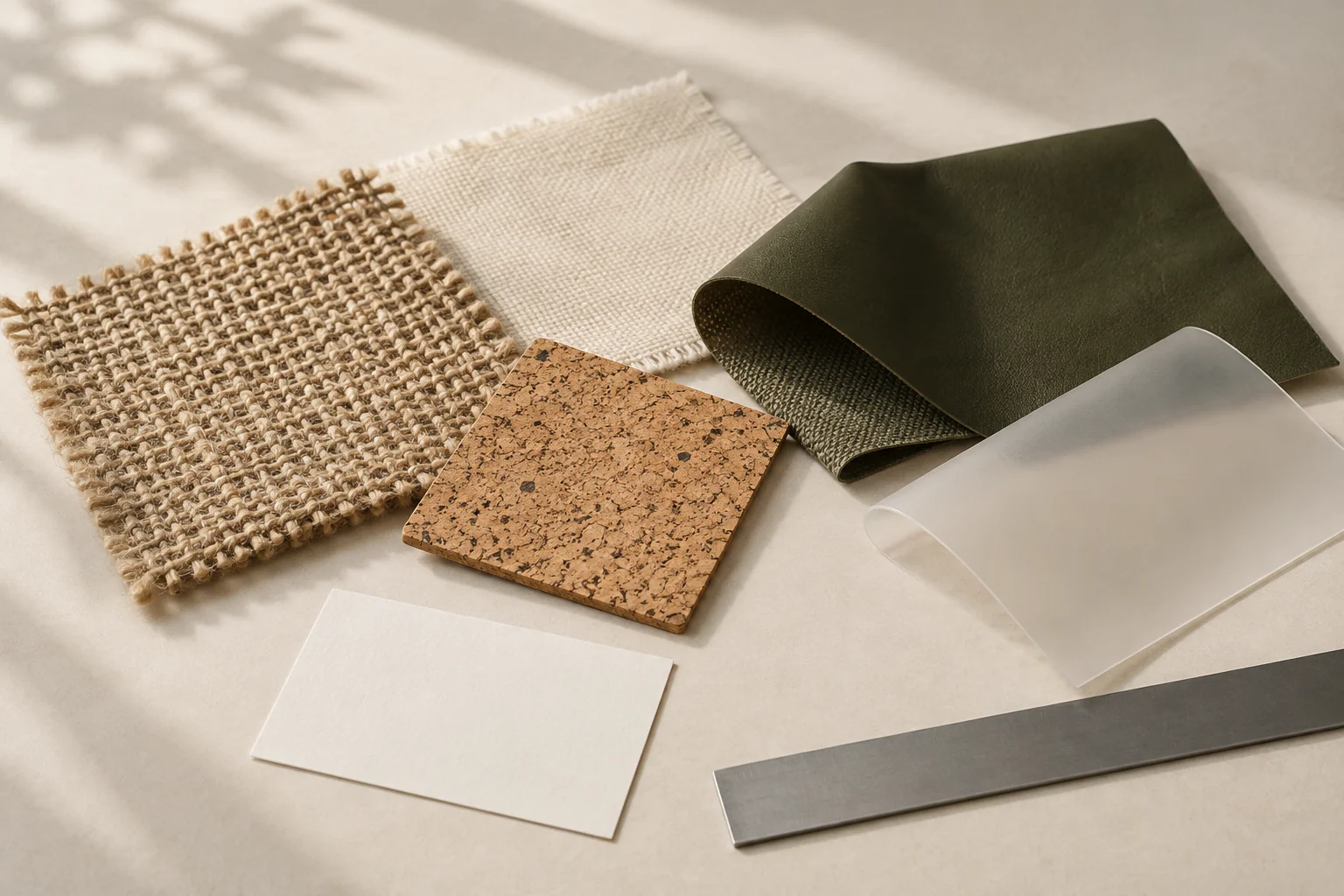
Browse material families such as woven fibres, coated sheets and recycled polymers, then compare named material records.
Explore materials for bags and accessories or footwear. Confirm the component, grade and operating conditions before selecting.
Read regulatory references and certificate scopes, then record the evidence still needed for the specific material.
"Sustainable" is a claim, not a measurable property. Material names can hide differences in formulation, backing, finish and supporting documents. A useful shortlist compares those factors for a specific grade and intended product.
Recommendation and payment are fully separated. A supplier may pay to be listed in our database -- never to be recommended. No supplier can edit what we publish about a material's limitations.
Interest is disclosed on-site. When we may receive a referral fee from a supplier we introduce, we say so -- in the same weight as the rest of the text. Concealing a commercial relationship inside a recommendation carries legal risk and destroys trust.
Negative findings are published regardless of commercial relationship. When we say a material is unsuitable for something, that judgement is drawn from the supplier's own published specification, the scope of its certificates and the applicable standard -- not from our own bench testing. The limit and its supporting source matter as much as the claimed benefit.
We distinguish source documents, editorial interpretation and evidence that is still missing.
First, the sources. Supplier-published specifications, the scope and limits of the certificates a supplier holds, and primary regulatory sources. Where a figure comes from a supplier, we say so.
Second, the limits. We do not operate a laboratory, and we have not bench-tested any product on this site. Where we mark a material unsuitable for an application, that judgement is drawn from the supplier's own published specification, the scope and limits of its certificates, and the applicable standard -- not from our own bench testing. Budget for your own bench testing before you specify.
We do not sell materials. Our revenue comes from three sources, each structured to preserve neutrality:
When an enterprise buyer contracts with a supplier listed here, we may receive a standard referral commission. We present two or three options with the strengths and weaknesses of each -- never one.
We publish downloadable compliance tables and checklists for internal legal review. These are never gated -- no form walls, no email required.
Suppliers may pay to be listed in our database. Payment buys visibility -- never a recommendation, never the right to alter negative findings, never removal from limitation warnings.
"Material Primer may receive a standard referral commission when an enterprise buyer contracts with a supplier listed here, and suppliers may pay to be listed. Suppliers may never pay for recommendations, cannot alter negative findings, and cannot purchase removal from our limitation warnings."
This reference exists to document what materials are made of by mass, how they fail under mechanical stress, and where they must not be specified. We publish without vendor endorsement. We do not operate a laboratory. A figure needs a source, an applicable grade and a date to support a buying decision; missing evidence remains an open question.
If you are a sourcing professional evaluating a claim, a supplier declaration, or a certificate of analysis, we invite you to send it to us and we will check it against the certificate's scope and the applicable standard. Asking is never a request for a quote.